Bahasa Duri
Jama-jaman baine
A1: Apa jamanna to baine inde' Duri?
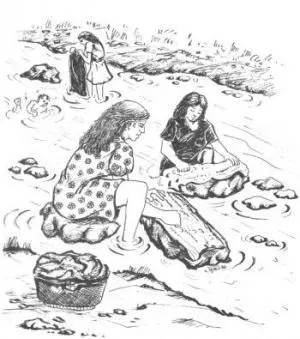
B1: Buda rupanna, mannasu, mamosok, sangganna to jama-jaman jio bola baine ngasanra.
A2: Te'daraka namangbara'bah to baine?
B2: Jama-jamannara to muane to mangbara'bah sola pariu.
A3: Apara disanga "pariu"?
B3: Ia to disanga pariu, ia to mantanan pare jio uma, disanga too mangnguma.
A4: Jio mandaraka bola jamanna to baine?
B4: Te'da ia, sanga, ia namangkamo to muane tumorak na uranmo, malemi to baine ntanannii utan-utan, dalle, kandoa', bue.
A5: Inda to male pasa'?
B5: Ia to inde' Duri biasanna bainera to male pasa'. Iana te'da wattunna to baine male pasa', muanena male pasa', susinnamo indona Juhani.
A6: Indara nnampai pea inde'?
B6: Bainera mangngampa pea. Iara ke denni naola to baine, muanena mangngampa pea.
A7: Denraka jama-jaman baine najama to muane?
B7: Te'da jama-jamanna to baine najama to muane, sanga pada mpunnai jama-jaman.
|
English
Women's Work
A1: What is considered women's work in Duri?
B1: Various things. For instance cooking, washing clothes, and all the housework which women do.
A2: Don't the women work in the gardens?
B2: Keeping gardens and rice paddies is men's work.
A3: What do you mean by 'keeping a rice paddy'?
B3: What I mean by 'keeping a rice paddy' is planting rice in the paddy and also working rice fields.
A4: Do women only work at home?
B4: No, because once the men have finished preparing a garden plot and the rains have started, then the women go plant vegetables, corn, cassava, and beans.
A5: Who goes to the mnarket?
B5: In Duri, usually the women go to market. But if the woman doesn't have time, her husband goes to market, just like Juhani's mother.
A6: Who takes care of children here?
B6: The women watch the children. But if the wife goes out, her husband watches them.
A7: Is there women's work which men also do?
B7: No there isn't, because they each have their own work to do.
|